

Happy New Year! As we move into 2025, let’s take some time to explore the digital marketing landscape for the upcoming year and what trends to watch and implement for success.
Digital marketing is constantly evolving.
Last year, we saw a massive influx in the use of AI for various purposes and a shake-up as Google was declared a monopoly by the Department of Justice (DOJ).
We continued to see increased digital privacy laws, which make tracking online users and the buyer’s journey more challenging. This increase in privacy is good for the consumer but harder for the digital marketer.
These factors will undoubtedly impact 2025 as well.
Staying adaptable to multi-channel strategies is not just a good idea; it’s a necessity.
You never know what significant event may threaten a digital marketing sector, so being prepared and proactive is key.
Personalization is not just a trend; it’s a strategy.
As we enter 2025 and encounter more generative AI tools, now is the time to incorporate more personalization into your digital marketing toolbox.
Personalizing your messaging and customer journey will keep you ahead of the game and reassure your customers of your understanding of their needs.
People value connection, and AI lacks a human component. While it can save time, the real human factor will be key.
A key theme of 2025 is prioritizing quality and engagement over quantity.
Online, people are not just numbers but individuals with needs and desires.
It’s crucial to revisit where your ideal clients and customers spend their time online and, more importantly, how you can be present, provide support, and add value to their online experience.
Let’s explore the other top 10 digital marketing trends to watch and implement.

#1. Multi-channel marketing: targeting every stage of the buyer’s journey
Why it’s crucial in 2025
Buyers are more fragmented across platforms, consuming content differently at each stage.
The online buyer’s journey is a three-stage process that guides potential customers’ interactions with your brand before they purchase.
In short: Awareness → Consideration → Decision.
- Awareness Stage: Your potential client or customer realizes they have a problem or need and starts researching solutions online, typically through search engines, social media, or educational content like blog posts, videos, or infographics.
- Consideration Stage: In this stage, your potential client or customer considers different options to solve their problem. They compare products or services, read reviews, download case studies, and engage with more in-depth content such as webinars or eBooks.
- Decision Stage: The user is ready to make a purchase. They look for pricing, customer testimonials, free trials, or demos to make a final decision. Conversion often happens on landing pages, product pages, or via contact forms.
Actionable tips
- Review your website traffic and behavior data to understand which channels drive awareness, consideration, and conversion.
- Use Google Analytics 4 (GA4) to identify touchpoints that matter. (Check out the last blog post that relays how to analyze traffic sources.)
- Ensure your content addresses Awareness, Consideration, and Decision stages.
- To guide users, provide valuable resources such as checklists, comparison guides, and case studies.
Key channels to include
- Social media
- Paid ads
- Video/podcasts
- Thought leadership blog posts

#2. Content quality and authority: the core pillar of SEO
Why it’s crucial in 2025
In 2025, content quality and authority are more critical than ever for SEO success. Google prioritizes valuable, engaging, and authoritative content over outdated tactics like keyword stuffing.
The emphasis is on creating trustworthy, relevant content that answers user intent and drives engagement.
Google’s evolving algorithms focus on E-E-A-T:
- Experience
- Expertise
- Authority
- Trust
To ensure E-E-A-T, your content must provide unique insights, be backed by credible sources, and engage users with interactive elements.
Long-form content still reigns supreme for SEO authority and engagement. Long-from content includes in-depth guides, case studies, how-tos and tutorials, and industry reports.
Backlinks, citations, and authorship signals are crucial for establishing authority. Sites that consistently publish in-depth content from recognized experts will rank higher.
Actionable tips
- Within your long-form content, consider:
- Answering multiple user questions in one piece
- Use structured headings and subheadings for clarity
- Incorporate quotes, case studies, and data
- Link to credible sources to boost trustworthiness
- Instead of constantly creating new content, prioritize updating and optimizing existing content to keep it relevant:
- Audit your content library and identify pages that have lost traffic over time
- Update facts, statistics, and internal links to keep your content fresh
- Add new sections and expand content to make it more comprehensive
- Optimize your content for intent and ensure it answers questions clearly and thoroughly
- Enhance with multimedia by adding videos, infographics, and interactive elements to boost engagement
- Google’s algorithms track how users interact with your website content. To improve engagement signals, it’s a good idea to:
- Include clear CTAs (calls to action)
- Encourage comments and social shares
- Ensure fast load times and mobile-friendliness
- Use internal linking to keep users on your site longer
Key content to include
- Thought leadership blog posts
- Pillar pages
- Guides
- Whitepapers
- Case studies
- Author bios with credentials that demonstrate expertise and trust
#3. Generative AI & search: transforming content discovery
Why it’s crucial in 2025
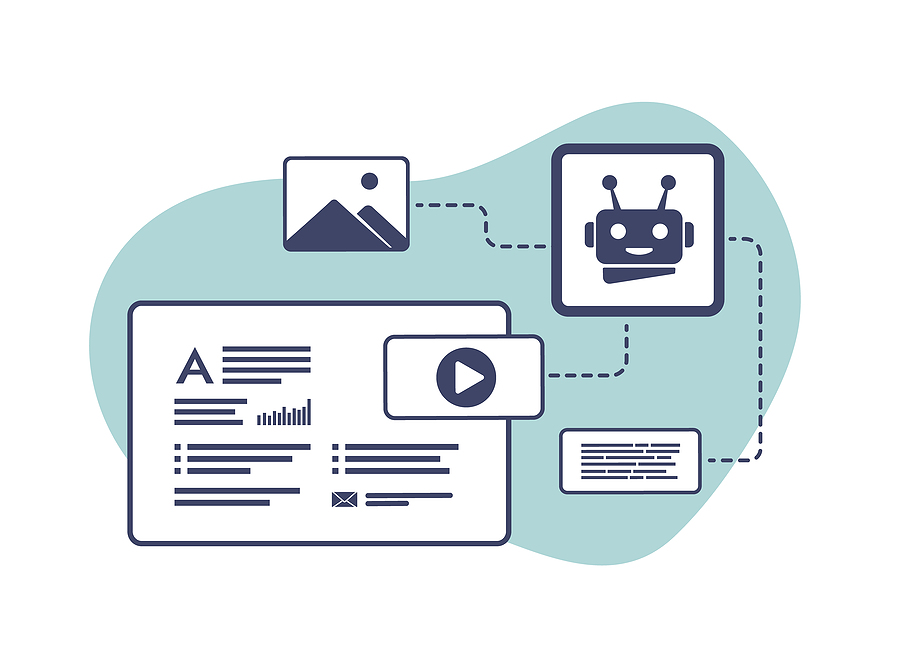
The rise of Generative AI in search—including Google’s Generative Search Experience (GSE) and AI-powered search engine results pages (SERPS)—is critical in 2025 because it fundamentally changes how users discover, engage with, and trust content online.
If you fail to adapt to these changes, you risk losing visibility and relevance in the search results.
Google’s GSE creates synthesized answers from multiple sources, reducing the number of users who click on traditional organic links. Ranking at the top of Google searches is no longer enough. You need to be part of the AI-generated answers.
Generative AI-powered search relies on natural language processing (NLP) to understand user intent and deliver contextually accurate answers. If you want to get found in AI results, your content must be conversational, human-friendly, and contextually relevant to different stages of the buyer’s journey.
In 2025, search is no longer about just driving clicks to your website—it’s about becoming part of the answer itself. With AI-generated summaries, brand authority, and trust will define who gets featured.
Actionable tips
- Create high-quality, comprehensive content that answers users’ questions concisely and comprehensively in a conversational tone.
- Use long-tail keywords and question-based phrases to align with natural search patterns.
- Structure your content with FAQs, step-by-step guides, and how-tos to match conversational queries.
- Make sure to include clear headings, lists, and concise answers.
- Implement structured data to help Google understand your content’s context, relevance, and key points. Then, it will use this information to generate AI-generated answers.
- Focus on backlinks and citations. These signal to Google that your content is credible and reliable.
Key content to include
- Thought leadership blog posts
- Pillar pages
- Guides
- Whitepapers
- Case studies
- Author bios with credentials that demonstrate expertise and trust

#4. Social search: the new way people discover content
Why it’s crucial in 2025
In 2025, social platforms are the new search engines. Users increasingly turn to X, TikTok, Instagram, LinkedIn, and Pinterest to search for recommendations, tutorials, reviews, and thought leadership content.
If you want to get found when your target audience searches, your SEO strategies must expand beyond Google and optimize for social search visibility.
Social media platforms prioritize visual, engaging content, meaning search behavior is evolving beyond keywords to focus on multimedia formats.
To succeed, focus on searchable posts with relevant keywords and hashtags, thought leadership content that builds brand authority, and visual, video-first content optimized for short attention spans.
Consider where your target clients and customers search on social media
- TickTok is Gen Z’s Google. Younger audiences use TikTok to search for products, services, and advice in an engaging, visual format.
- Users search Instagram for inspiration, brands, and recommendations. Although it’s a very visual platform, your engaging copy can complement it.
- Professionals seek thought leadership content on LinkedIn that solves their business challenges. LinkedIn provides its blogging platform, and content shared there is also findable on Google search.
- Pinterest is a visual search engine for ideas, tutorials, and product discovery. It’s a great place to post blog posts, videos, and other content users want to save for later. Think tips and tricks, how-tos, and more.
Actionable tips
- With your social posts, create searchable captions and hashtags that reflect user intent.
- Focus on what users would type into a search bar and ensure videos, images, and headlines highlight the main keywords.
- Research trending hashtags in our industry and use a combination of broad hashtags and niche hashtags.
- Create branded hashtags to build a following around your content.
- Focus on thought leadership, especially for sites like YouTube, LinkedIn, and TikTok, to help establish authority in your niche.
- Post micro-blog posts, videos, or quick insights to position yourself as a thought leader.
- Use LinkedIn Articles for long-form SEO-optimized content.
- Repurpose blog content into short TikTop clips, Instagram Reels, or LinkedIn posts. Turn podcast episodes into bite-sized video clips with searchable titles.
- Use carousel posts on Instagram and LinkedIn to create mini-guides that answer common search queries.
- Prioritize videos and visuals since social media tends to favor video content in the search results.
- Use text overlays and captions to emphasize key takeaways and boost discoverability.
Key channels to include
- TikTok
- YouTube
- X

#5. Video and podcasting: key content formats for engagement
Why it’s crucial in 2025
Video and podcasts are essential for capturing attention and building brand authority in 2025. The human component is front and center in these formats.
The key to success lies in understanding what type of content works best on each platform and how to repurpose that content across formats for maximum reach and impact.
For example, you could write a blog post and convert it to a YouTube video. Next, you could pull clips from the video as short-form and extract key insights into a podcast episode. You could turn the podcast into social media posts and share it on social media.
By repurposing content, you can increase efficiency, reach, and engagement while reducing the need to create new content.
Short-form and long-form videos are critical to engaging audiences, but where and how you distribute them matters. Let’s explore the differences.
Short-form video: quick, engaging, bite-sized content
Short-form videos are perfect for grabbing attention and delivering short, high-impact content for brand awareness, trends, and quick tips.
Actionable tips
- For short-form videos, consider:
- quick tips and hacks
- how-tos under 60 seconds
- behind-the-scenes moments
- trending challenges
- user-generated content and testimonials
- Use hooks in the first three seconds to capture attention and keep videos engaging, fast-paced, and visually appealing.
Key channels to include
- TikTok
- Instagram Reels
- YouTube Shorts
- Facebook Stories
Longer-form video: in-depth storytelling and thought leadership
Longer videos are ideal for building authority, sharing insights, and educating your audience on complex topics. These videos can serve as evergreen content that continues to generate traffic over time.
Actionable tips
- For long-form video, consider:
- deep-dive tutorials
- Case Studies and success stories
- interviews with industry experts
- thought leadership presentations
- webinars and live Q&As
- For longer videos, use chapter markers and timestamps on platforms like YouTube to help viewers navigate the information they seek.
- Optimize your video titles and descriptions for SEO.
- Include transcripts on your website to improve discoverability through search engines.
Key channels to include
- YouTube
- LinkedIn video
- Webinars and live streams
Niche podcasts: building community through audio
Podcasts are another powerful tool for thought leadership, especially in niche markets. B2B decision-makers and industry professionals are increasingly consuming podcasts to stay informed.
Potential clients and customers who listen to an hour or two-hour podcast get to know you well. If they feel connected or see the value, they will be more likely to contact or purchase one of your products.
There’s the option to start your podcast and become a thought leader in your industry, or you could reach out and pitch yourself to other podcasters in your niche to be a guest on their show. Being a guest on other podcasts is a great way to expand your reach within an audience seeking your expertise.
If you start your podcast, here are key formulas that work:
- Solo expert episodes – share insights, tips, and opinions
- Guest interviews – bring in thought leaders to provide fresh perspectives
- Panel discussions – explore trends from multiple angles
- Narrative storytelling – create case studies or success stories
- Q&A sessions – address audience questions in a conversational format
Actionable tips
- If you start your podcast, focus on consistent publishing to build a loyal audience. Short-form podcasts (10 – 20 min) are gaining popularity for busy listeners.
- Consider topics that people are interested in and may be searching for. Optimize your podcast titles, descriptions, and show notes for SEO.
- Consider the category that best suits your podcast and where your target audience is.
- Include transcripts on your website to improve discoverability through search engines.
- Take audio content from your podcast and:
- Turn it into YouTube videos
- Share short clips on social media
- Create blog posts from key insights
- Use quotes in your email marketing
Key channels to include
- These platforms allow you to host your podcast, distribute it to major directories, and track analytics:
- Once hosted, your podcast could be distributed to these top directories for maximum reach:
- Beyond hosting and directories, use these channels to promote your podcast and build an audience:
- LinkedIn – ideal for B2B podcasts and thought leadership
- YouTube – post full episodes, highlights, or teaser clips
- Instagram Reels & Stories – share clips to boost engagement
- TikTok – engage with your niche audience and share episode updates
- X – engage with your niche audience and share episode updates
- Facebook groups – promote your podcast in relevant niche groups
- Email newsletters – build a loyal listener base through your mailing list
- Reddit – participate in niche subreddit communities and share relevant episodes

#6. Personalization: for standout customer experiences
Why it’s crucial for 2025
Personalization in your digital marketing is one way to stand out in 2025.
Whether through email, social media, your website, or ads, users want tailored experiences that address their unique needs, preferences, and behaviors.
These relevant, personalized experiences foster customer loyalty, trust, and engagement.
Without personalization, your brand risks becoming generic and forgettable in a crowded digital landscape.
It’s time to leverage data-driven insights and AI-driven tools to deliver hyper-relevant content that resonates with individual users at the right time.
Actionable tips
- Leverage first-party data for insights collected through email sign-ups, quizzes, and customer interactions.
- Use this data to segment audiences based on behaviors, preferences, and purchase history.
- To help build trust, ensure you’re transparent about data usage.
- Use AI tools to tailor email subject lines, product recommendations, and offers.
- Use behavioral triggers (e.g., abandoned cart emails, product recommendations) to make emails more relevant.
- Create dynamic content that changes based on the user’s preferences or previous interactions.
- Segment your email lists by interests, location, and purchase behavior.
- Use social listening tools to understand what your audience is talking about and engage in real-time.
- Personalize your responses to customer comments and messages.
- Deliver exclusive offers or tailored recommendations through DMs or chatbots.
- Send follow-up emails with tailored product tips and exclusive offers.
- Use loyalty programs to incentivize repeat purchases based on past behavior.
- Offer personalized product recommendations and reorder reminders.
Key channels to include
- Email marketing
- Live chat
- Direct messaging on social media
- Text messaging

#7. Gamification: boosting engagement through interactive experiences
Why it’s crucial in 2025
In 2025, gamification will be a core part of digital marketing strategies to stand out in crowded feeds and reduce audience fatigue.
What is gamification?
Gamification involves integrating game-like elements into your digital marketing strategy to capture attention, motivate action, and boost engagement.
These elements include quizzes, challenges, badges, and leaderboards, and encourage users to interact with your brand in a fun and engaging way.
Why it works:
Gamification works because it taps into human psychology. Goals, achievements, and rewards drive people.
Gamification boosts engagement by making interactions fun, rewarding, and memorable.
Interactive content is more likely to hold users’ attention and can drive them to take specific actions, such as completing a form or purchasing.
Gamification also encourages users to share insights in exchange for personalized experiences or rewards.
Actionable tips
- Use spin-to-win games or scratch-and-reveal rewards to encourage website users to share their email addresses and/or boost click-through rates.
- Add interactive quizzes or surveys to the website to better personalize email recommendations and/or find the right product or service based on their needs.
- Creative interactive challenges that unlock exclusive content or discounts.
- Run interactive polls, quizzes, and contests on social media to boost engagement rates.
- Create challenges or scavenger hunts to encourage user-generated content.
- Implement progress trackers to encourage users to complete forms or take action.
- Use badges or rewards systems to gamify learning experiences (e.g., completing tutorials or knowledge bases).
- Implement loyalty programs with levels, points, or badges to encourage repeat purchases.
- Reward users with discounts, perks, or early access for achieving milestones.
- Use personalized challenges to re-engage dormant customers.
- Combine gamification with personalization tools to make interactions more meaningful. For example, you could deliver customized results after a user takes a quiz, tailor challenges to specific user segments on their behavior, or use dynamic rewards that change based on a user’s actions or loyalty tier.
Key channels to include
- Interactive quizzes or surveys
- Social media
- Loyalty programs/apps
- Email marketing

#8. Voice search & voice commerce
Why it’s crucial in 2025
Voice search and voice commerce will become mainstream in 2025.
The continued rise of voice assistants like Alexa, Google Assistant, Siri, and others has transformed how users search for information and make purchases.
Users will expect quick, conversational responses to their queries and seamless voice-driven shopping experiences.
Brands that embrace voice search will stay ahead of the curve by offering seamless, hands-free experiences that meet users’ evolving expectations.
On-the-go and multitasking users prefer voice search and increasingly purchase directly through voice assistants.
You must adapt content strategies to optimize for voice search queries and prepare for the rise of voice-based transactions.
Search engines prioritize conversational queries—meaning your content needs to reflect how people speak, not just how they type.
In comparison to traditional typed searches, voice searches tend to be:
- Longer and more conversational
- Question-based (e.g., “What’s the best HOA management software?”).
- Local-focused (e.g., “Where can I find a printer repair service near me?”).
- Action-oriented (e.g., “Order printer ink from Amazon.”).
Actionable tips
- Create content that answers specific questions users will likely ask via voice search.
- Example:
- Typed search: “HOA software pricing.”
- Voice search: “How much does HOA management software cost?”
- Example:
- Use FAQ sections with conversational language to increase your chances of appearing in featured snippets and voice responses.
- Structure content to answer questions about who, what, where, when, why, and how.
- Write concise, direct answers to common questions. Use bullet points, lists, and tables to organize content clearly.
- Focus on answering questions in the first 100 words of your content.
- Since many voice searches are local queries, make sure your business is:
- Listed on Google My Business with up-to-date information
- Optimized for local keywords and/or city-specific searches
- Using schema markup to provide search engines with detailed business data
- If your site is eCommerce, integrate voice ordering features through platforms like Amazon Alexa and Google Shopping and provide personalized product recommendations via voice assistants. Focus on voice-enabled customer service to answer post-purchase questions or assist with reorders.
Key channels to include
- FAQ sections on your website pages with conversational language
- Blog posts that address common questions
- Google My Business
- If eCommerce:
- Amazon Alexa
- Google Shopping / Google Merchant Center

#9. Data review and pivoting: iteration is key
Why it’s crucial for 2025
The most successful digital marketers in 2025 will be those who conduct regular data reviews using multi-touch attribution tools to understand customer journeys better.
Success will also come to those who embrace iteration and experiment with new tactics.
Data challenges are becoming more complex in the evolving digital landscape due to privacy regulations and harder-to-track user journeys.
Attribution issues make pinpointing which channels drive conversions difficult, while AI and automation require regular optimization to stay effective.
Key data challenges in 2025
- Tracking cookies are disappearing, making it harder to track user journeys.
- Multi-touch attribution is essential to understanding how users interact across multiple touchpoints.
- Stricter data privacy laws mean less user data is available.
- Anonymous and aggregated data is becoming the norm.
- Users interact with multiple channels and devices before converting.
- AI-powered search and social search are influencing decision-making paths in ways that are harder to track.
Actionable tips
- Use multi-touch attribution tools (listed below).
- Instead of relying on last-click attribution, use multi-touch attribution to see how a blog post, social media ad, and email contributed to a conversion.
- Identify the most effective channels and adjust budgets accordingly.
- Make data review a routine process with weekly or monthly check-ins to analyze campaign performance. Focus on key metrics like engagement, conversions, and customer lifetime value (CLV).
- Be willing to pivot your strategy when the data indicates it’s necessary.
- Test new formats like short-form videos, podcasts, and interactive content.
- Shift focus to channels that aren’t performing to emerging opportunities.
- Use A/B testing to validate new approaches.
Multi-touch attribution tools
As these challenges increase in 2025, multi-touch attribution tools are essential for better understanding customer journeys.
Google’s new Meridian tool helps track user interactions across multiple touchpoints and channels. It is an open-source Marketing Mix Model (MMM) that provides deeper insights into marketing outcomes and predicts how marketing tactics affect sales.
HubSpot is a fantastic tool for gathering insights about your potential clients and customers’ activity on the website, email, and what content they reacted to.
Northbeam Analytics is another tool for tracking the customer journey. It is excellent for tracking ROI for paid ad campaigns.

#10. Engagement and niche marketing: prioritize quality over quantity
Why it’s crucial in 2025
In 2025, engagement will matter more than reach. In a crowded digital landscape, reaching targeted, niche audiences is more effective than casting a wide net. It’s simple quality over quantity.
Prioritizing quality engagement and niche marketing will make your brand stand out, build authority, and foster stronger customer relationships. More importantly, it will drive better results than broad, untargeted campaigns.
The key is engagement-driven marketing that prioritizes meaningful interactions over vanity metrics like follower counts.
What is niche marketing?
Niche marketing focuses on serving specific targeted audiences with content that specifically addresses their needs and interests. Instead of aiming for a broad reach, you build thought leadership in niche areas to deepen engagement.
Why it works:
- Audiences in niche markets are more engaged and loyal.
- You face less competition and can establish authority faster.
- Personalized content resonates more with specific groups than generic messaging.
- When you focus on what you do best, you are the best, and people remember you.
When considering niche marketing, ask yourself:
- What do you do best?
- Who are your favorite clients or customers? What makes them different?
- Where do you stand out?
- Where are there opportunities in a new field or product line?
Actionable tips:
- Focus on building thought leadership in niche areas.
- Spark conversations on social media with thought-provoking posts.
- Use polls, Q&A sessions, and interactive content to encourage participation.
- Respond to comments to build stronger relationships.
- Identify niche topics that aren’t widely covered.
- Create in-depth content (blog posts, videos, podcasts) that answer questions and offer unique insights.
- Engage with your audience in industry-specific forums and on social platforms.
- Repurpose content across multiple formats (e.g., blog, podcast, social media) to maximize visibility.
Key channels to include
- LinkedIn is ideal for B2B thought leadership. Use polls, long-form posts, or comments to engage with professional audiences
- Blog posts that speak to your niche audiences:
- What questions do they have?
- What challenges are they facing?
- Instagram and TikTok are great for short-form, interactive content that sparks conversations with younger demographics.
- Podcasts help to build authority in niche areas through long-form conversations. Encourage listeners to submit questions or share feedback.
- YouTube and YouTube shorts combine short-form and long-form video content to educate and engage niche audiences.

Adapting for success in 2025
As the digital landscape evolves, businesses must adapt to key trends to stay competitive and relevant. The marketing strategies that worked in the past may no longer deliver in 2025’s fast-paced, AI-driven world.
We must stay flexible to navigate new technologies and changing user behaviors. Success lies in staying agile, embracing innovation, and prioritizing meaningful engagement. We must engage deeply, adapt swiftly, and lead with authority.
As we step into 2025, remember to:
- Focus on value-driven content.
- Reach your audience where they are across search, social media, video, podcasts, and voice.
- Optimize for Google’s Generative Search Experience (GSE) and AI-powered SERPs.
- Consider social search when crafting your social media posts and videos, and include targeted keywords in your titles and descriptions.
- Embrace new technologies and personalization possibilities that deliver tailored experiences using data-driven insights.
- Foster real engagement with targeted audiences.
- Regularly review your digital marketing data and be ready to adjust strategies.
Implementing these digital marketing tactics will position your business to thrive in 2025 and beyond.
Do you have any trends to add for 2025? Share in the comments below.
Ready to grow your business in 2025?
Contact us here for a personalized strategy to optimize your digital marketing efforts.
Recent Comments